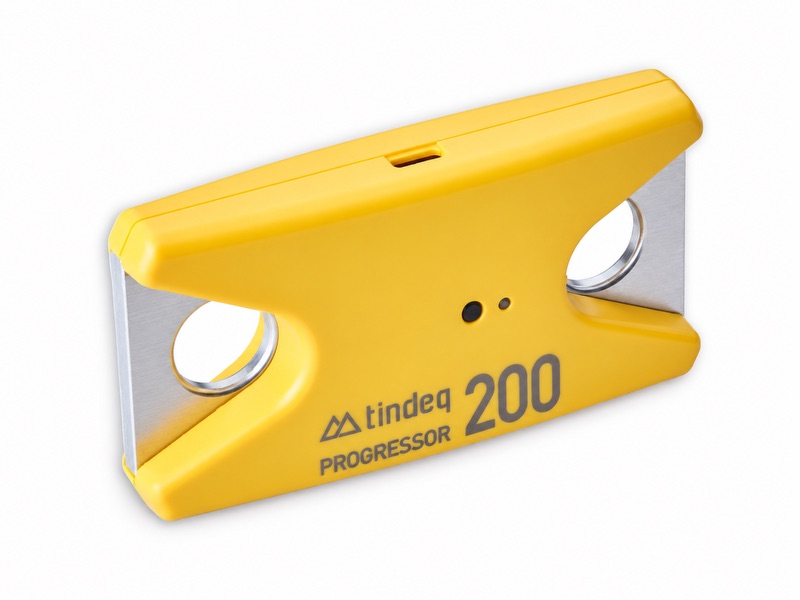
Upper limb only · 200 kg capacity
Progressor 200
Grip and hand, shoulder rotation, elbow flexion and extension, cervical testing.
0.25 % full-scale precision · USB-C rechargeable
$ 160
Add to cartIn stock
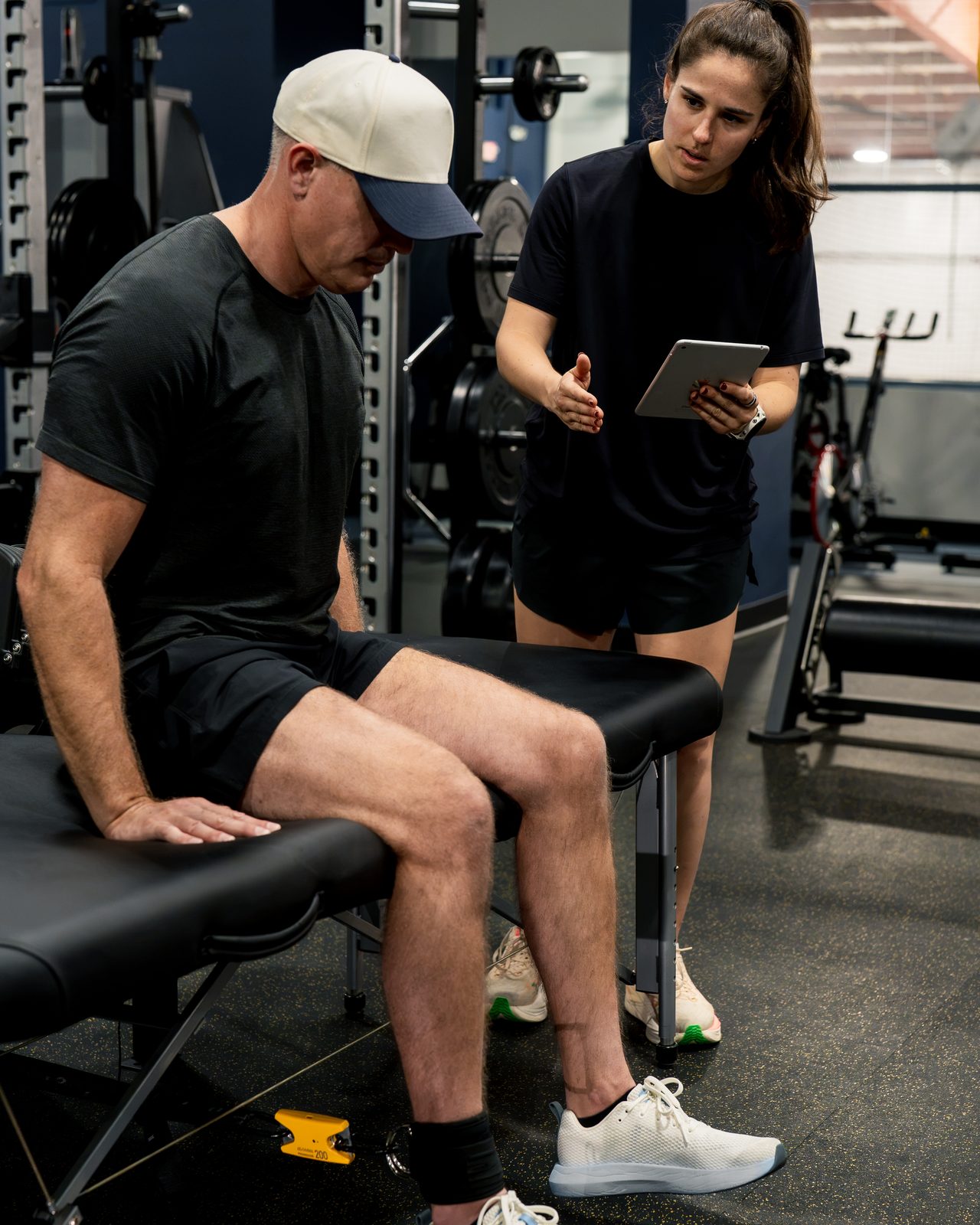
Physio & Rehab
The Progressor is a compact dynamometer for assessments and strength testing. See live results, compare sides and track changes over time in the Tindeq app.
In use at 1 800+ clinics and performance labs
What it measures
Every metric below is derived from the same force trace, and the trace is kept. Any figure can be traced back to the trial it came from.
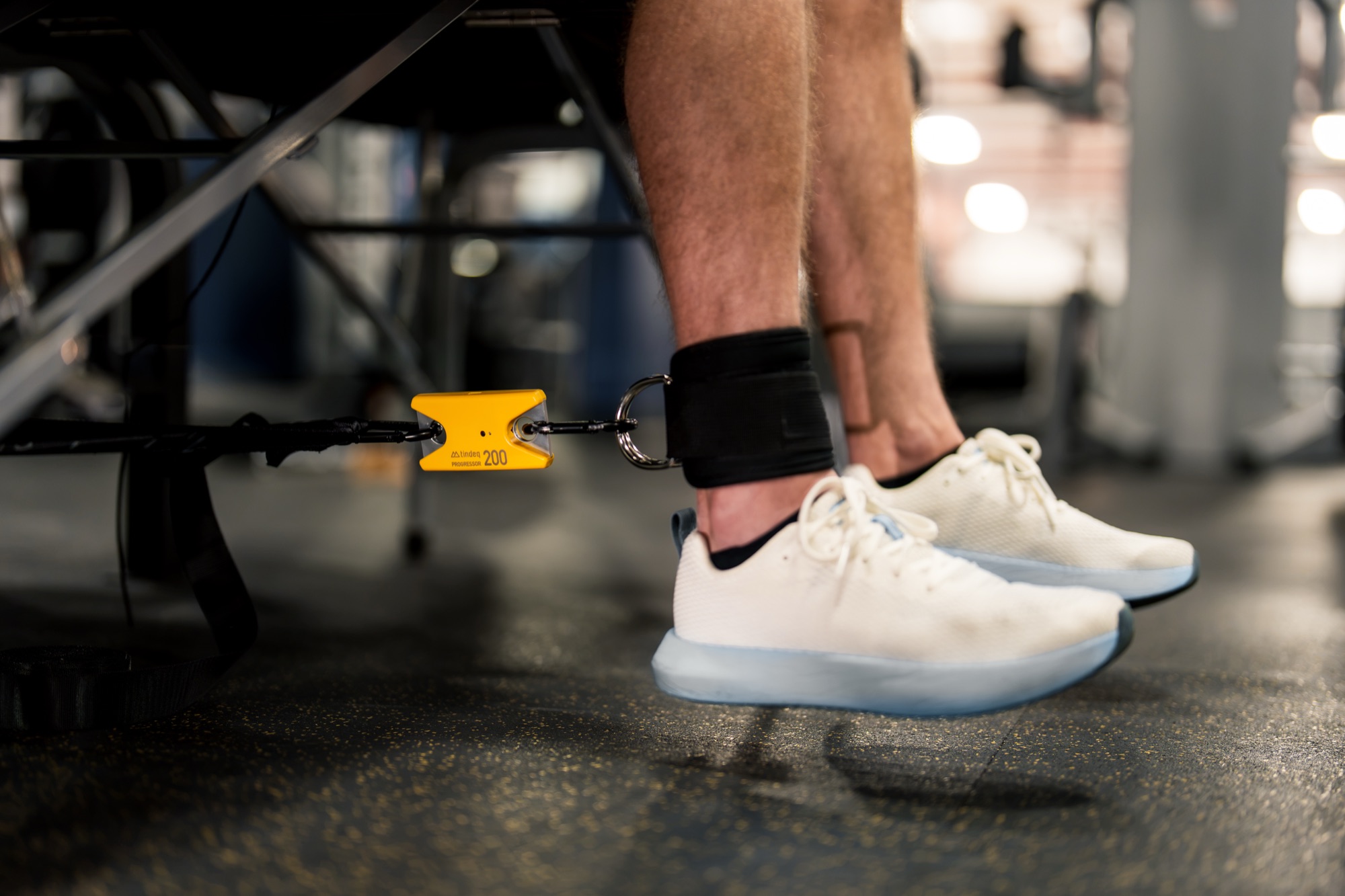
Maximum voluntary contraction over a set hold, recorded as a force–time trace rather than as a single number, so the trial behind the figure is still there to look at.
kg · 0.01 resolution
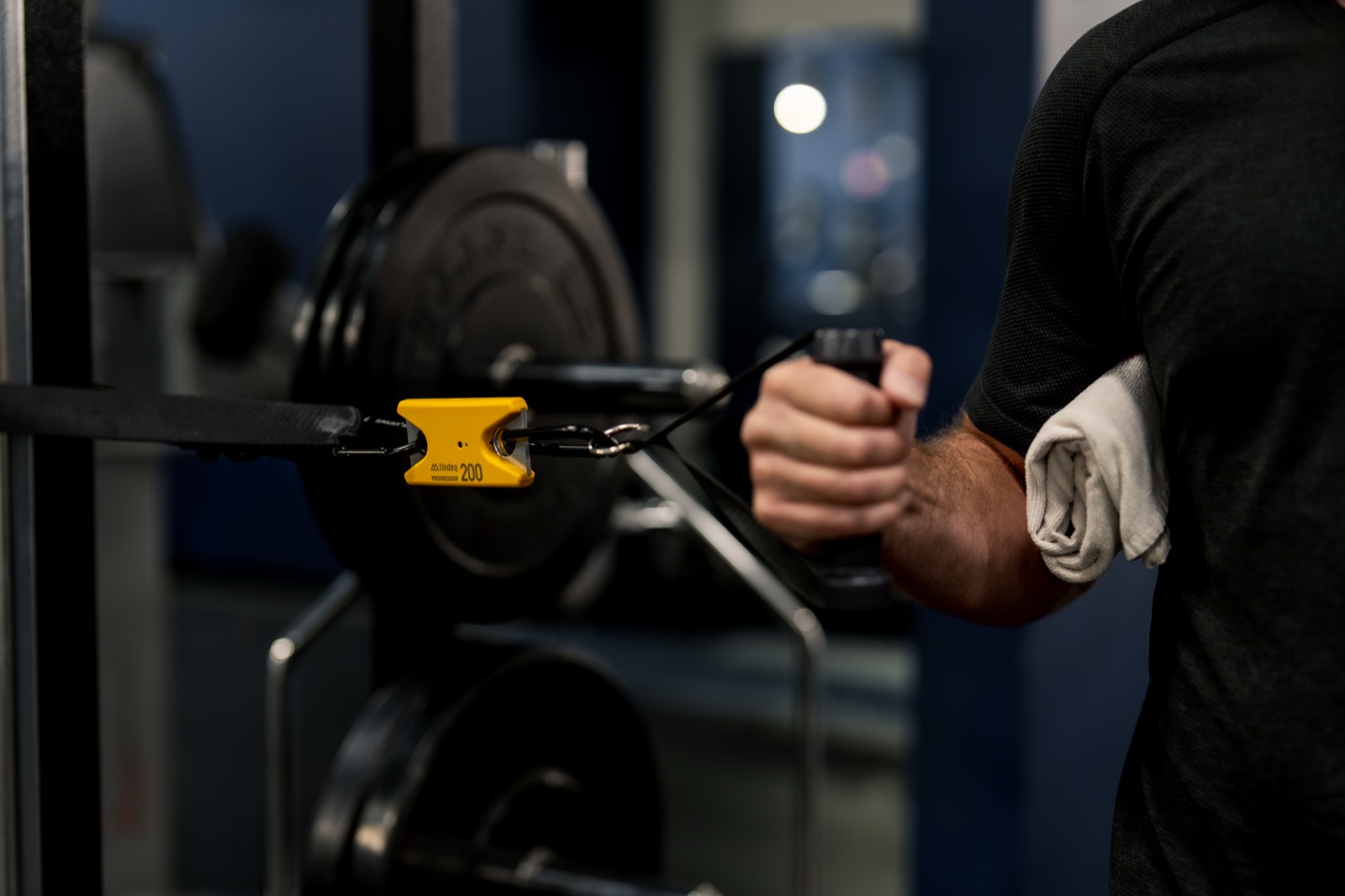
How quickly force rises from onset, read at the early windows your protocol specifies rather than at a single vendor-chosen figure.
kg/s · time windows you set
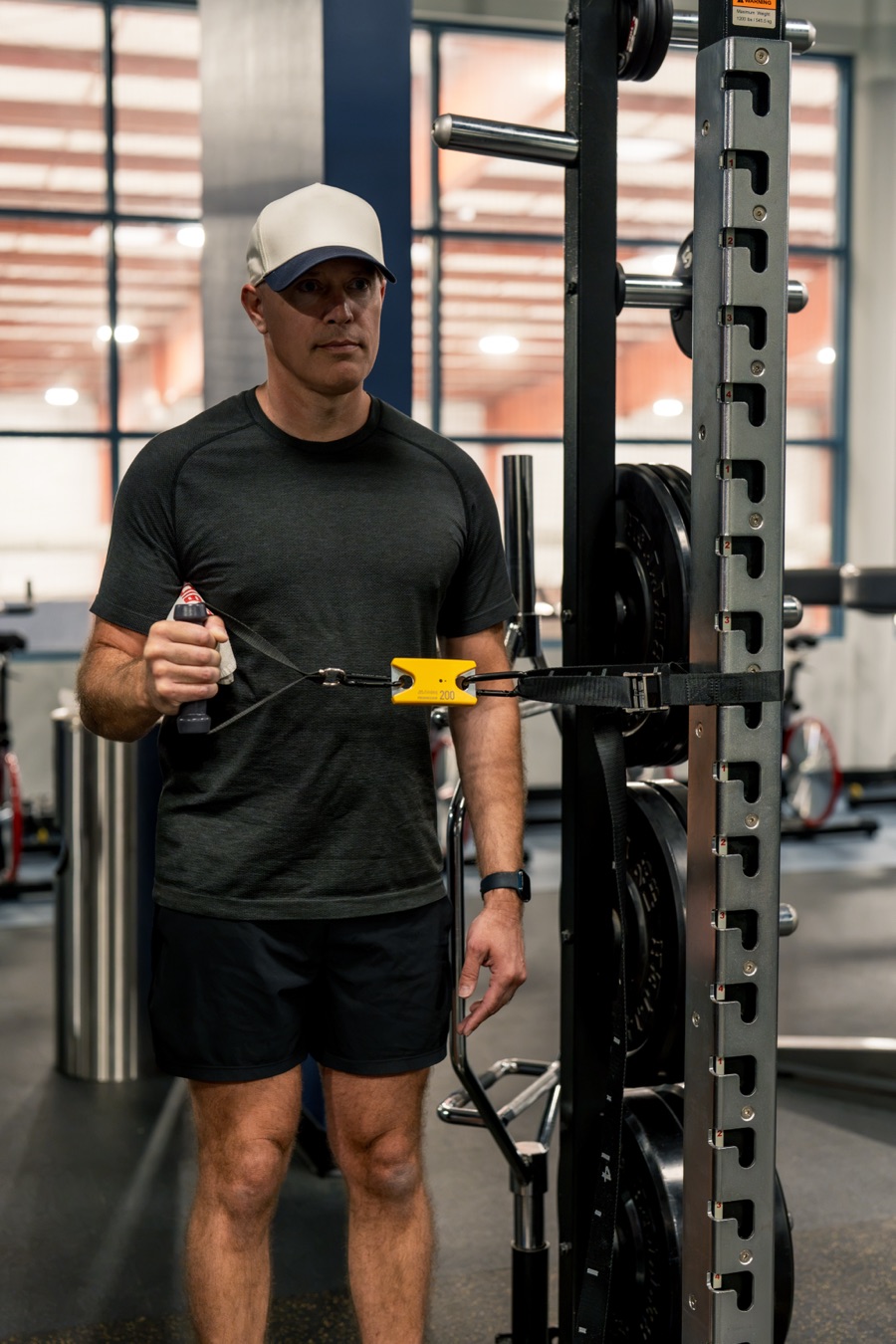
Involved against uninvolved, paired within one session and reported as a percentage — the number return-to-sport criteria are written around.
% · left / right, paired in one session
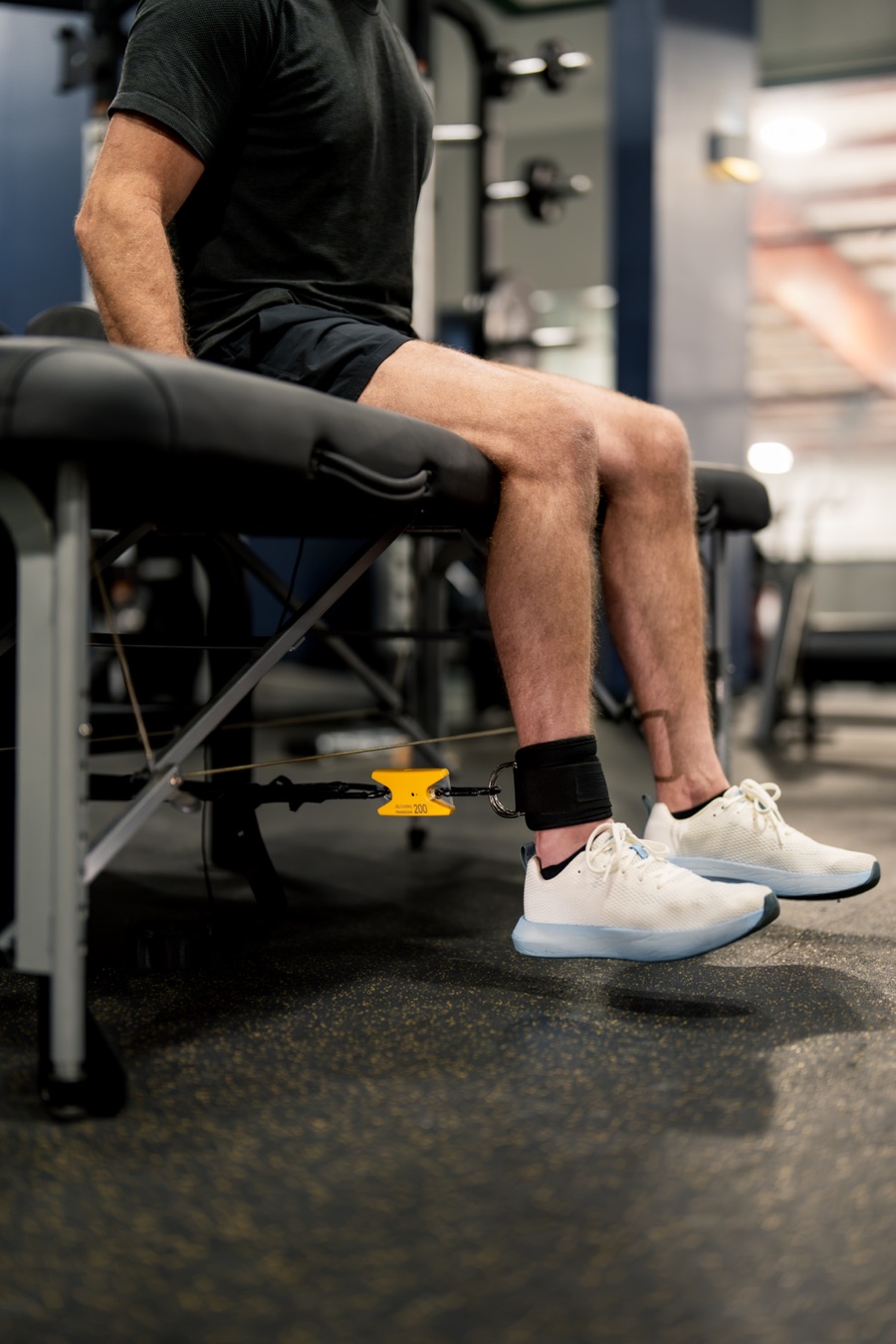
Sustained holds and repeated-effort protocols, with the decay curve kept intact and time to a threshold you choose reported alongside it.
% decay from peak
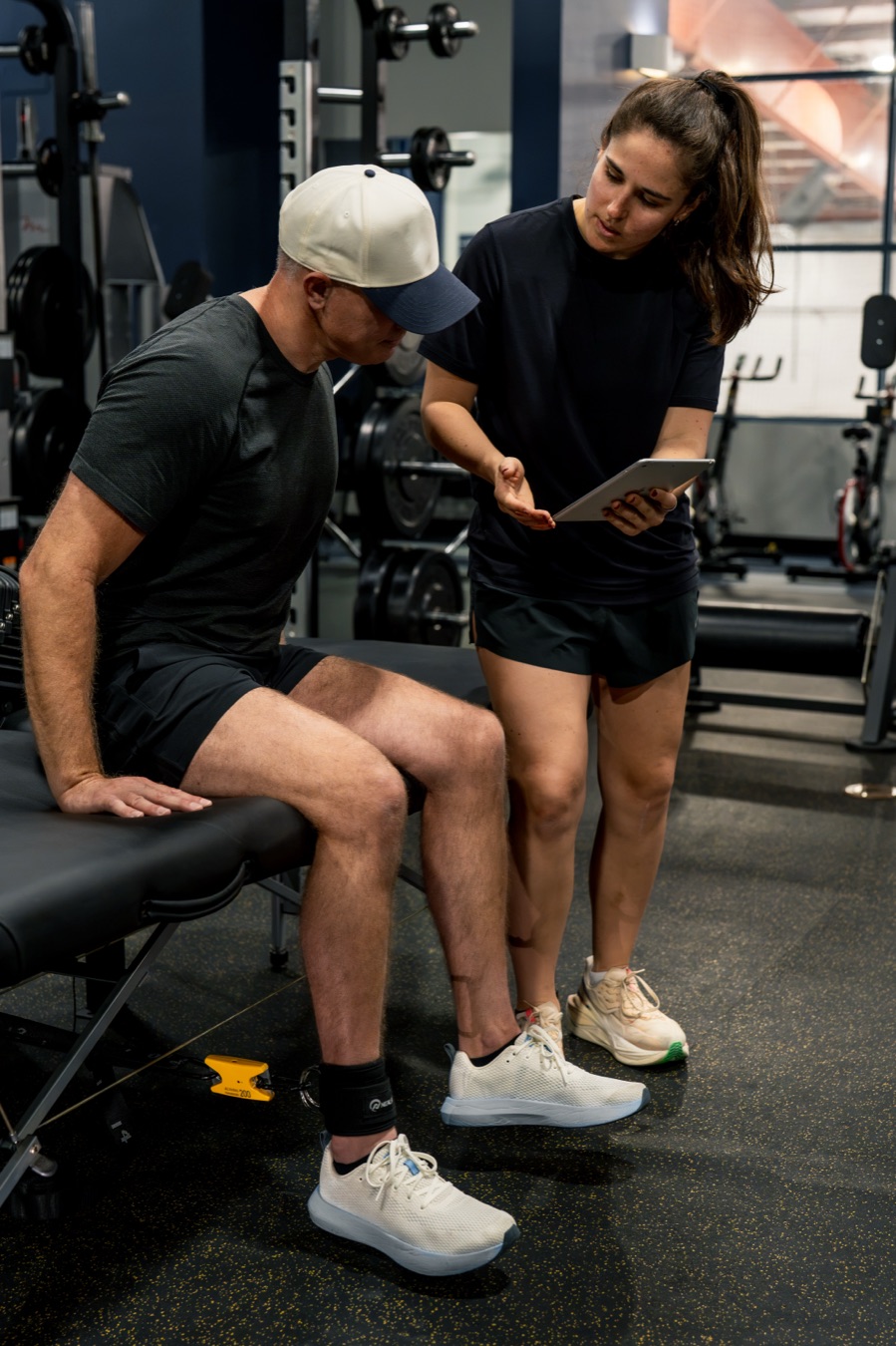
The same protocol, weeks apart, on the same instrument. What that supports for a single patient is a question for the method, and the method is set out below rather than asserted here.
instrument repeatability 0.1 % of full scale
The app
Add the people you test as clients. Choose who you are testing, and every session is saved to that person.
The app can be downloaded for free and every feature is included: no professional tier, no seat count, no per-clinician licence.
Tap the avatar in the top corner and pick who you are testing. The corner always shows who is selected.
Sessions are saved to the selected person. History, routines and the dashboard show only that person's tests, for every test type.
Add a client with a name, an email and body weight, and change them later on the client's page.
Share any session as a PDF with your clinic name and logo, the client's name, the results for each side, symmetry, and a progress chart.
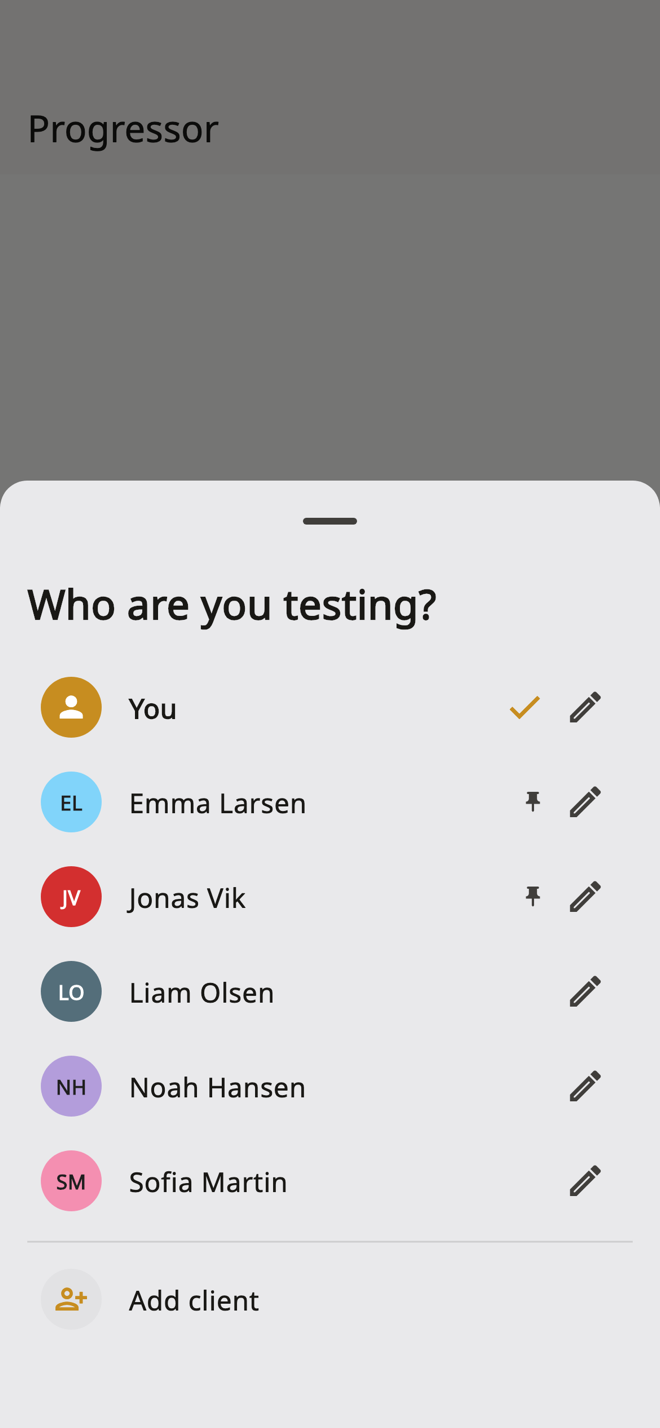
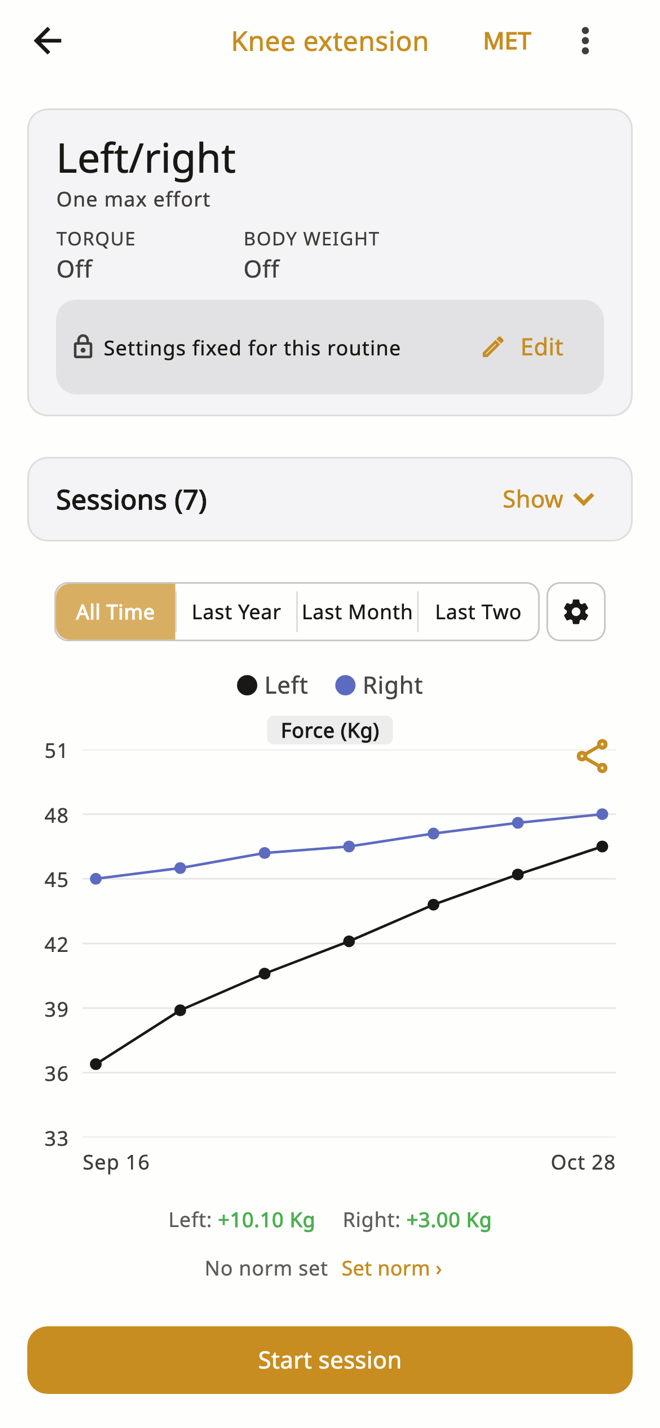
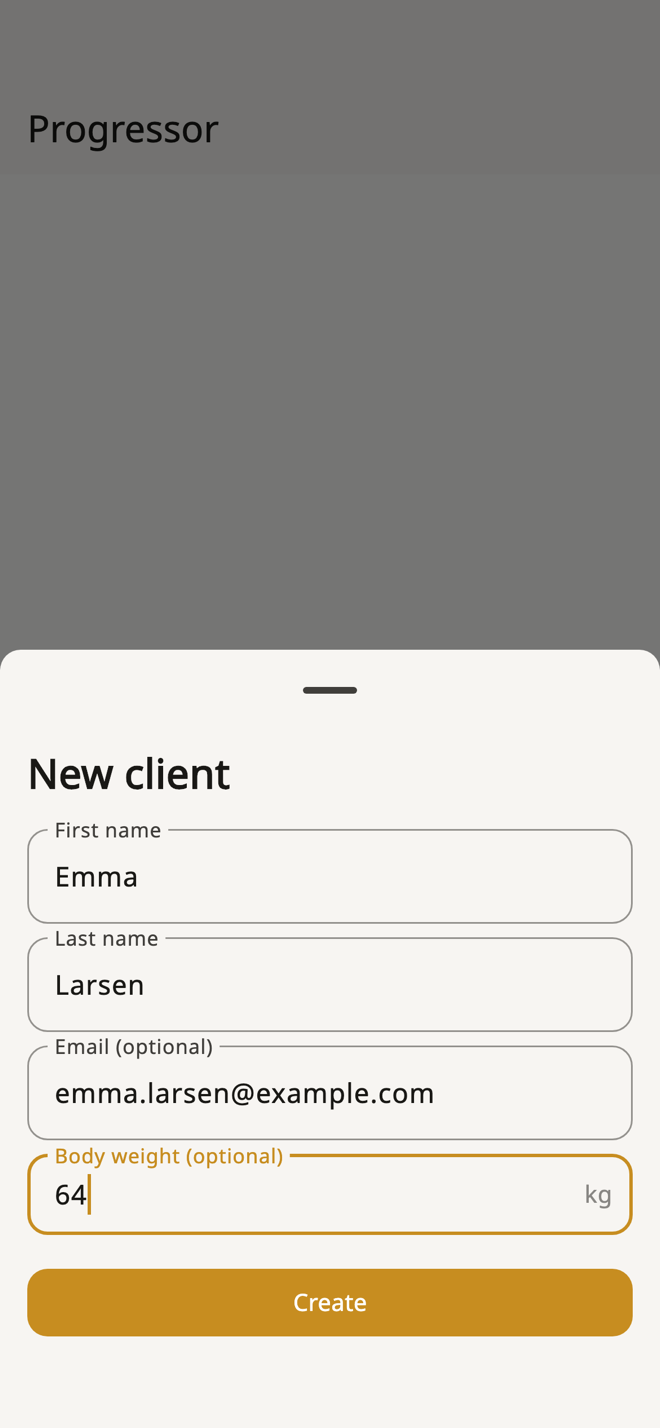
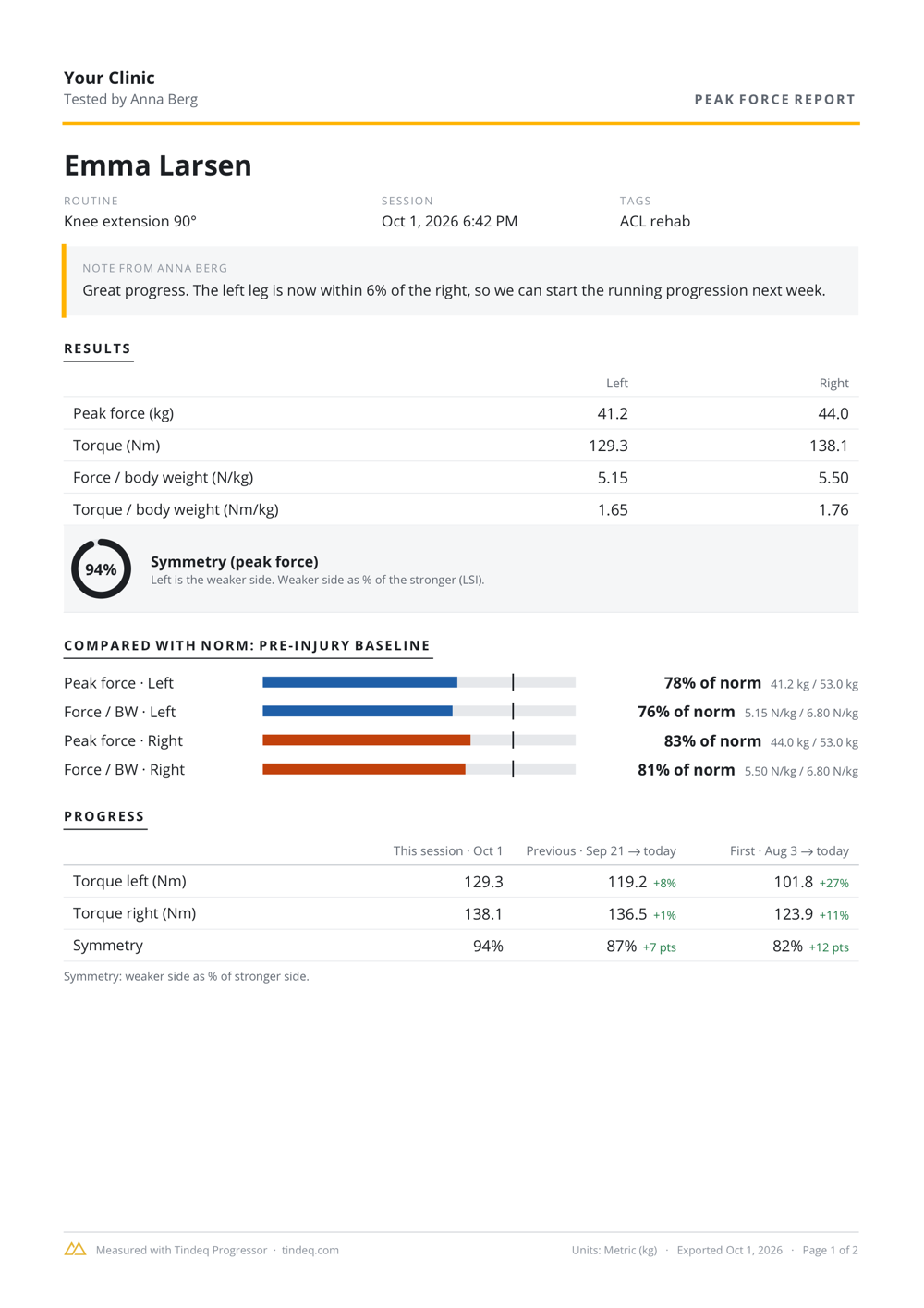
Screens from the Tindeq app · example clients
Tindeq Progressor
Inside the app
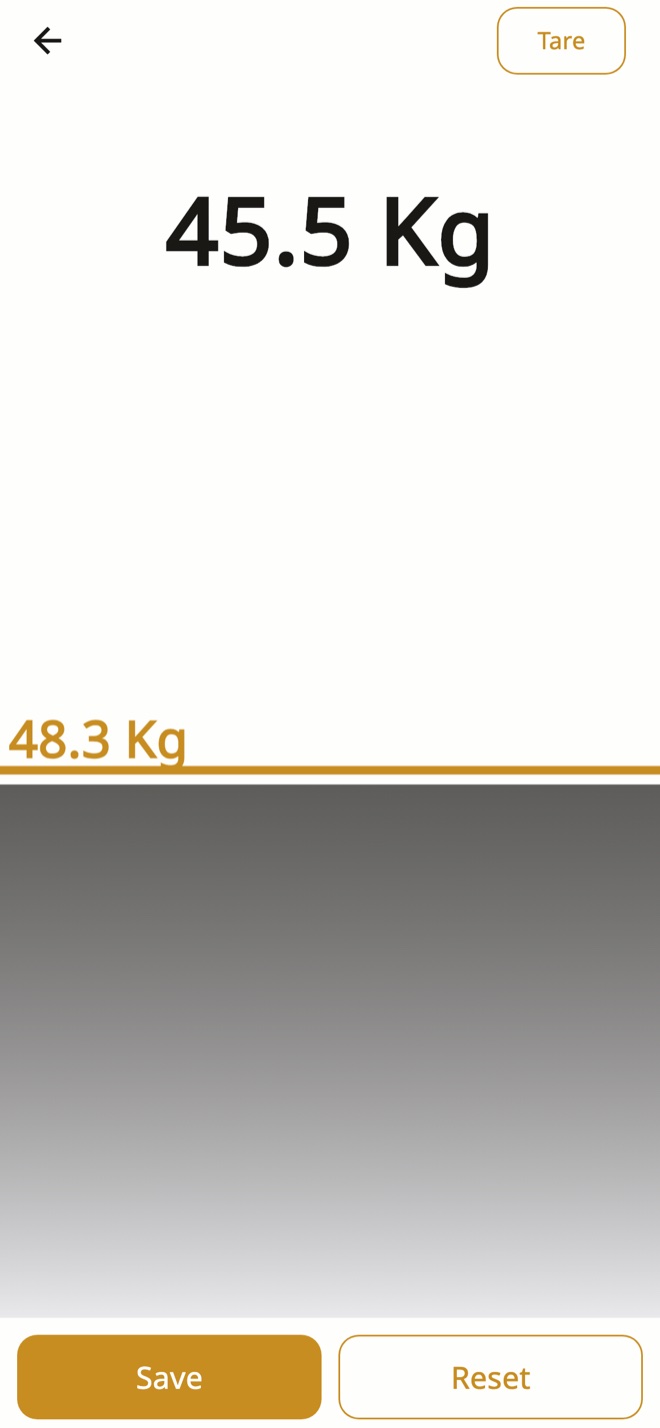
Peak Force
Live force while the client pulls, with the peak marked. Save it to the selected client.
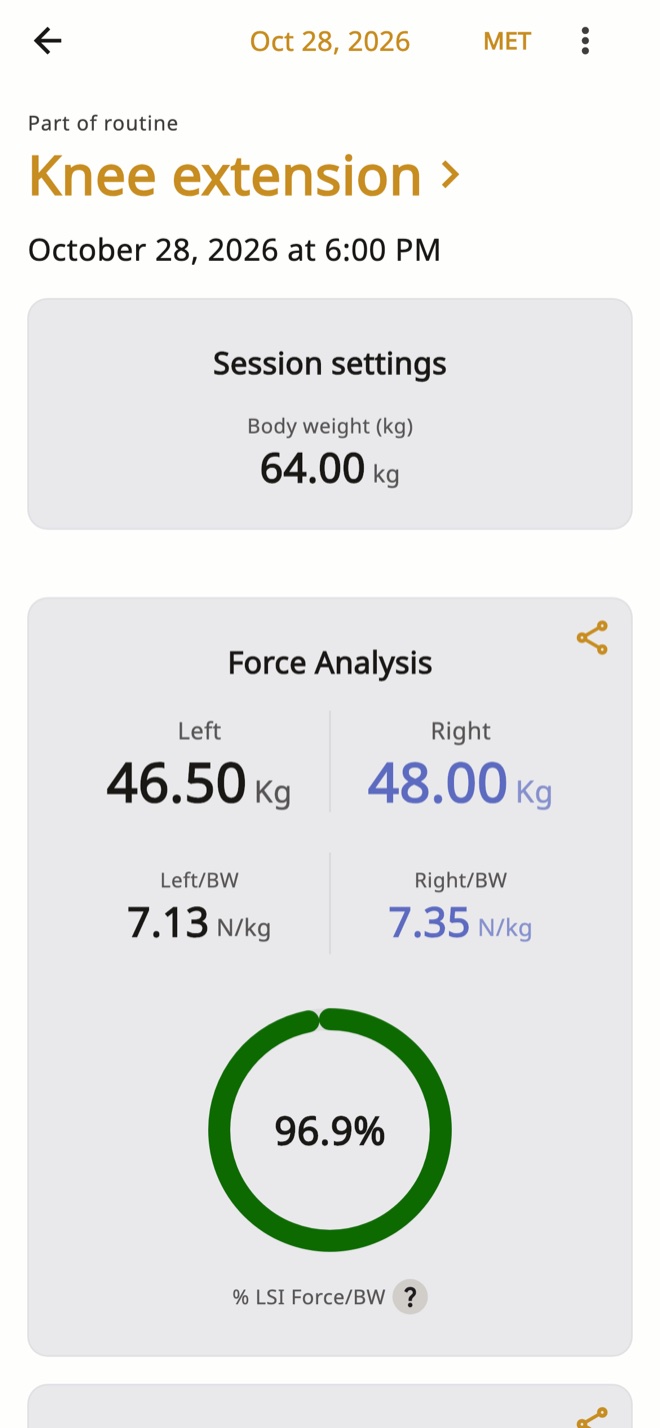
Peak Force · left and right
Test both sides in one session. The result gives each side, each side relative to body weight, and the weaker side as a percentage of the stronger (LSI).
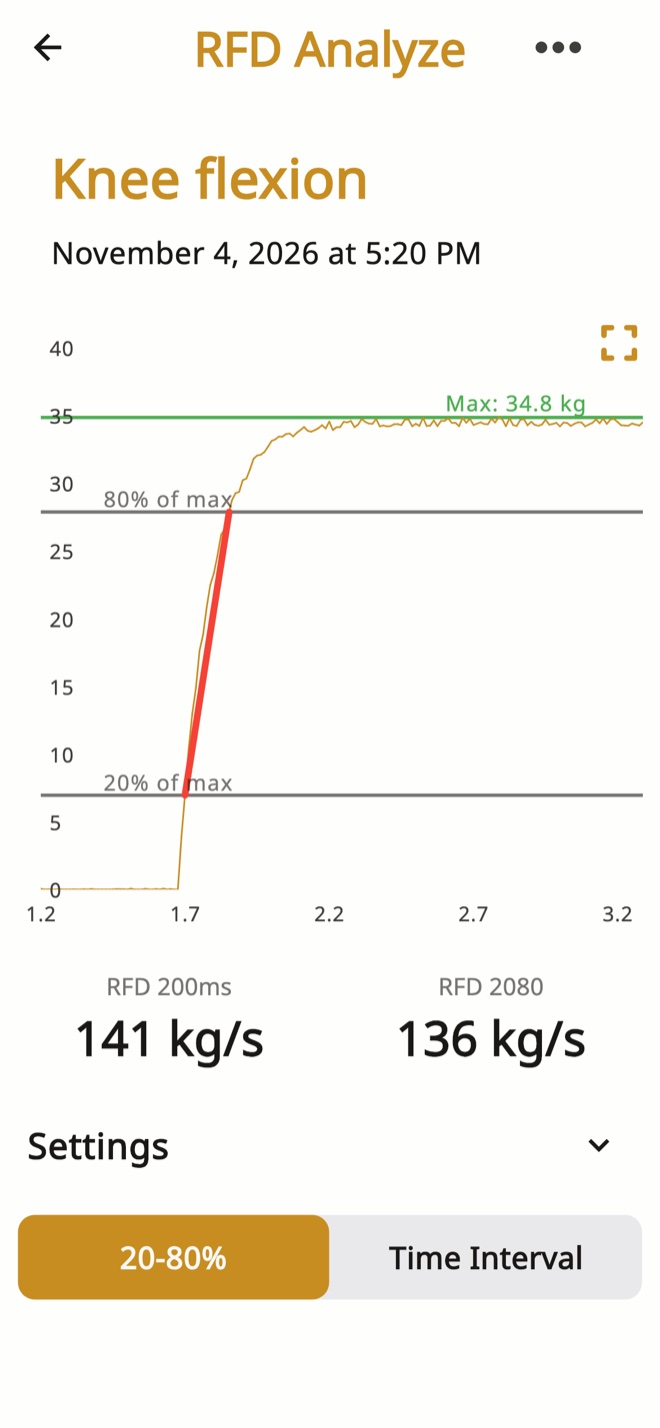
RFD
The trace of a fast pull, with RFD between 20 and 80 percent of the peak and over one time window you choose (100, 150, 200, 250, 300 or 1000 ms).
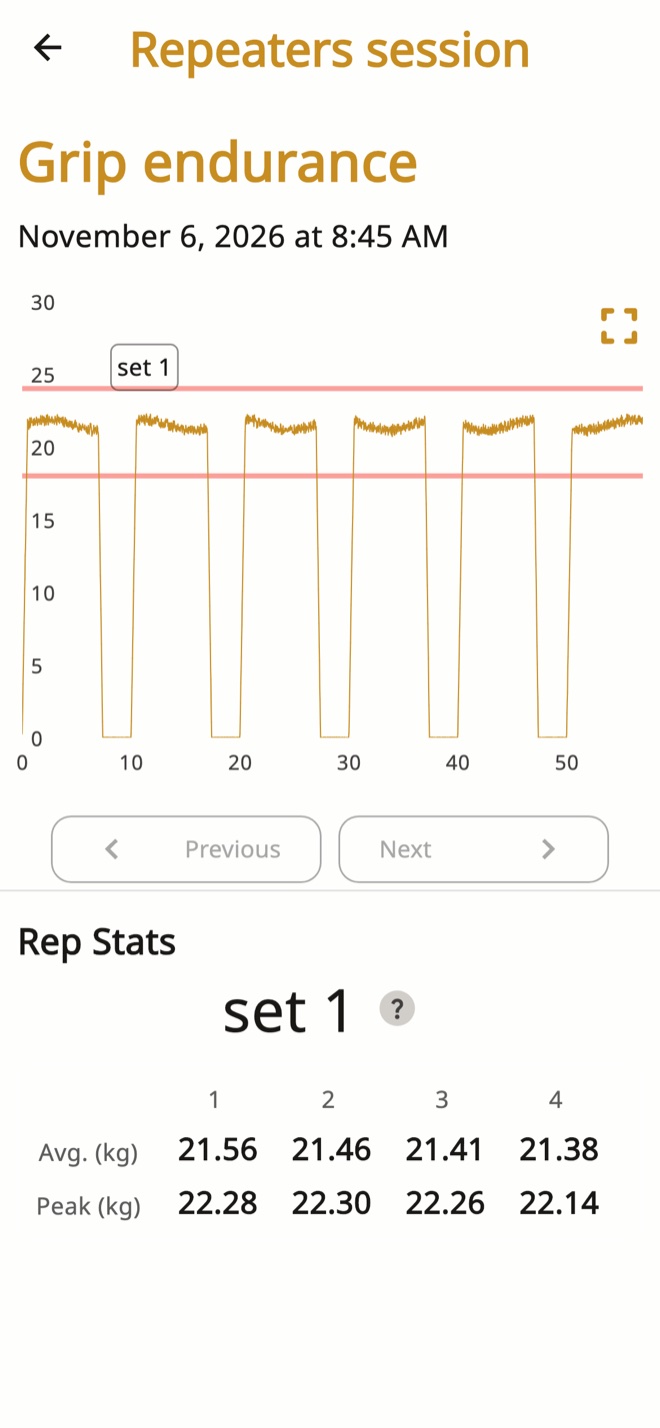
Repeaters
Timed work and rest against target lines. Step through the sets and read the average and peak of each rep.
Every test saves to the selected client. Saved sessions can be exported as CSV or shared as a PDF report.
App screens · example data
Validation
Peer-reviewed studies have compared the Progressor with reference instruments: isokinetic and hand-held dynamometers, a wired load cell, a force plate and a materials-testing machine. A figure without its method is not evidence, so each row says who was tested, against what, and what was found.
People using it
I absolutely love this tool. It is a fantastic way to train and gather data related to your training. I am finding it super useful as a rehabilitation tool too, being able to quantify the return to full strength after a pulley injury.
I work in high performance sports med with some of the most elite groups in the world and use this daily. I have to say this app and device absolutely nail it. Nobody else comes close… From testing to isometric training, do yourself a favor and grab one.
The Bluetooth connection is impressively fast — literally within 2 seconds, you're ready to go. The most useful feature for me is the MVCI mode: it measures asymmetry automatically and compares results with previous tests using graphs. The Tindeq Progressor offers an unbeatable balance of price and quality.
We used this as part of our regular Isometric Mid Thigh Pull testing in youth athletes. Previously we were using a crane scale, but the Tindeq unit really upgraded our process, as it gives live feedback via the app which the athletes love and really increased intent during the testing.
Buy
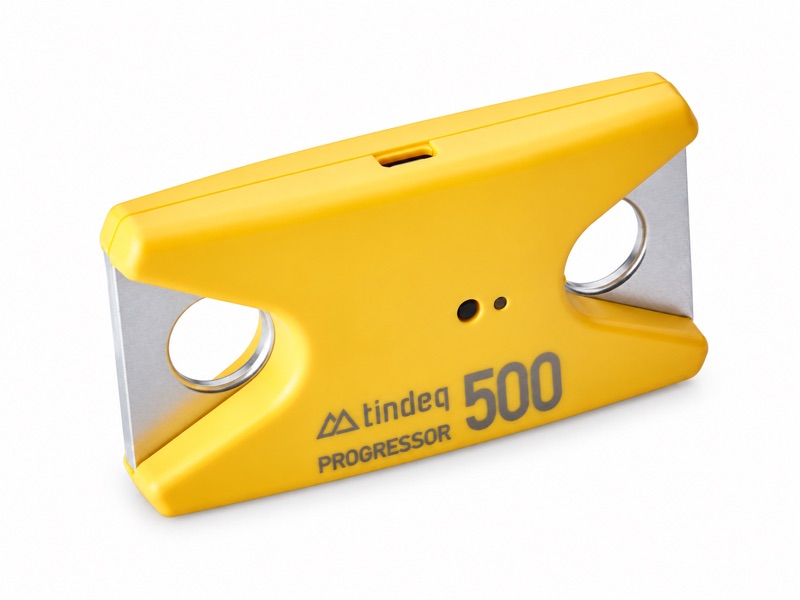
The Progressor 500 covers every test on this page, upper and lower limb. Lower-limb and full-body tests such as mid-thigh pull, knee extension and hip abduction load considerably higher, and the 500 has room for them, today and when your protocols grow. The Progressor 200 is for upper-limb work only: grip, shoulder, elbow and cervical.
Upper limb only · 200 kg capacity
Grip and hand, shoulder rotation, elbow flexion and extension, cervical testing.
0.25 % full-scale precision · USB-C rechargeable
$ 160
Add to cartIn stock
Recommended for clinics
Upper and lower limb · 500 kg capacity
Every test on this page: grip, shoulder, elbow and cervical, plus isometric mid-thigh pull, knee extension and flexion, hip abduction and adduction.
0.25 % full-scale precision · USB-C rechargeable
$ 220
Add to cartIn stock